Arthaus-Musik on Facebook Arthaus-Musik on Instagram Arthaus-Musik on Vimeo Arthaus-Musik on Youtube Arthaus-Musik on Twitter
 
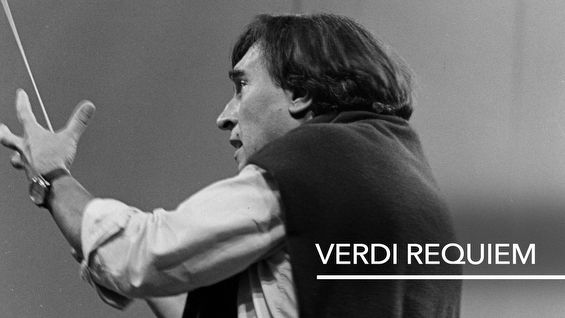
Verdi_Requiem WatchNow

The death of Alessandro Manzoni, whom Verdi almost religiously worshipped, in 1873 deeply affected Verdi, who was then already being admired as Italy’s greatest living composer and who was just going through a creative crisis. The Messa da Requiem is without a doubt a deeply personal composition by Verdi which expresses the innermost fears of the composer in being confronted with his own mortality. At the same time it is also a very “public” work through which the poet of the Italian people as well as the whole Italian spirit was meant to be honoured in a musical language which embodied the great tradition of Italian music and Italian culture whose disappearance Verdi felt that he was witnessing. In the documentary and rehearsal Claudio Abbado, internationally acclaimed as one of the finest conductors of the day, is seen working on Giuseppe Verdi´s Requiem. Recorded in the Church of San Marco in Milan, the venue of the world premiere of the Requiem, this documentary gives a fascinating insight into Abbado´s rehearsal methods, featuring orchestra and chorus of La Scala Milan, Montserrat Caballé and others. The film shows rehearsals for this grandiose musical creation taking place in three different locations: at the Chiesa di San Marco in Milan with some or all of the soloists, choir and orchestra; on the main stage at Teatro alla Scala with the orchestra on its own; and, thirdly, in one of the rehearsal rooms of the opera house, in some cases with different singers who were involved in a second performance. The result is an opportunity to directly compare the performances of two sopranos and two tenors. The soloists are Montserrat Caballé and Cecilia Gasdia (sopranos), Lucia Valentini Terrani (mezzo-soprano), Peter Dvorsky and Chris Merritt (tenors) and Samuel Ramey (bass), accompanied by the choir and orchestra of the Teatro alla Scala, Milan, and conducted by their director at the time, Claudio Abbado.

Composer:
Giuseppe Verdi

Directed by:
Humphrey Burton

Conductor:
Claudio Abbado

Soloists:
Jessye Norman (soprano), Margaret Price (soprano), José Carreras

Participant:
Ruggero Raimondi

Orchestra/Chorus/Bellet:
The Edinburgh Festival Chorus, London Symphony Orchestra

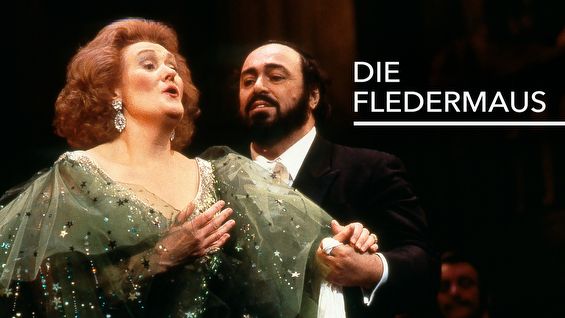
Die Fledermaus WatchNow

After its first performance in Vienna, the operetta Die Fledermaus set out to conquer the world. It is one of the few operettas which are regularly staged by the great opera houses of the world such as the New York Metropolitan Opera, the Milan Scala, The Staatsoper in Vienna and the Royal Opera House Covent Garden in London. In 1977 John Cox directed the piece in London with a lavish production using a stage set of Julia Trevelyan Oman. On New Year’s Eve of 1990 this production gave the luxurious setting for Joan Sutherland’s farewell from her London audience which had admired the singer since her great success at this famous opera house in the fifties. The glittering party in the second act of Die Fledermaus reached its high point during her tumultuously applauded appearance and the engagement of her friends and colleagues Luciano Pavarotti and Marilyn Horne with whom she had often appeared together on stage.

Composer:
Johann Strauß

Directed by:
John Cox

Conductor:
Richard Bonynge

Soloists:
Nancy Gustafson, Jochen Kowalski, Louis Otey

Participant:
Marilyn Horne, Luciano Pavarotti, Dame Joan Sutherland, Judith Howarth

Orchestra/Chorus/Bellet:
Chorus and Orchestra of the Royal Opera House

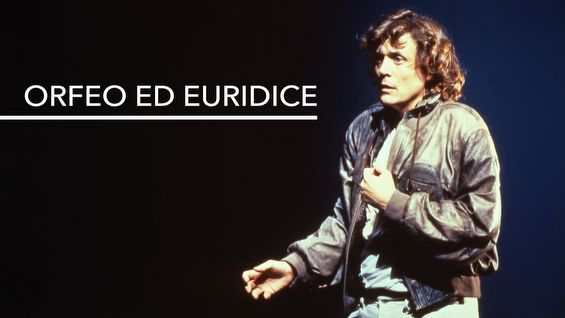
Orfeo ed Euridice WatchNow

Harry Kupfer's version of Gluck's Orfeo ed Euridice, originally conceived for the Berlin Komische Oper and now in the repertory of The Royal Opera, won the Olivier Award for "Most Outstanding Achievement in Opera".
According to legend, Orpheus' magical power as a musician enabled him to regain his wife from the dead on condition that he did not look at her on the journey back from Hades - a condition it proved impossible to fulfil. In Harry Kupfer's updated version, Orfeo, in leather jacket, trainers and jeans, sees his Euridice die in a street accident. Succumbing to depression, he languishes in Hades - a psychiatric hospital - before taking his electric guitar to charm the beasts in an inner-city concrete jungle. Hans Schavernoch has designed an ingenious set with projected imagery on revolving screens and mirrors.
The German male alto, Jochen Kowalski, gives a virtuoso performance as the tormented Orfeo, with the young British soprano Gillian Webster as Euridice.

Composer:
Christoph Willibald Gluck

Directed by:
Harry Kupfer

Conductor:
Hartmut Haenchen

Produced by:
Channel Four/Bayerischer Rundfunk/NPS/RM Arts

Soloists:
Jeremy Budd, Jochen Kowalski, Gillian Webster

Orchestra/Chorus/Bellet:
Chorus and Orchestra of the Royal Opera House

Die Hochzeit des Figaro WatchNow

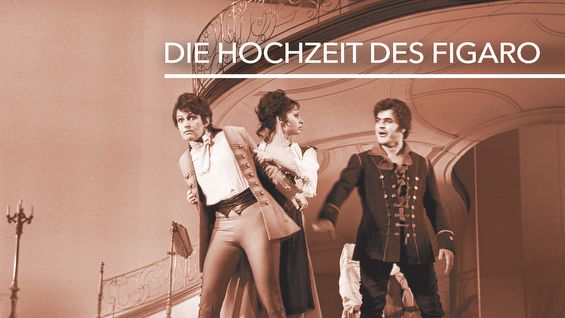
Walter Felsenstein (1901–1975), founder and general director of the Komische Oper in Berlin, was one of the twentieth century’s greatest creative theatre directors, who played a hugely important role in the revival of opera as a theatrical art form. A brilliant artist who directed over 190 productions during the course of his career, he was equally committed to the works, their creators, the ensemble and the audience.
The Marriage of Figaro that received its premiere on 26 February 1975 in the Komische Oper Berlin was Walter Felsenstein’s last production and in many respects can be regarded as representing his legacy. Having just returned from directing a guest production at Vienna’s Burgtheater, Felsenstein had been working on Figaro since early February 1974. He had already directed three productions of the work – in 1934 in Cologne, in 1942 at the Salzburg Festival and in 1950 at the Komische Oper. For the latter production, he had used earlier translations as the basis for producing a new text version, but he now decided that this was inadequate, as he had reached the conclusion that from the point of view of both form and expression, rhyme was crucial at many points in the musical numbers. He also wanted to further fine-tune the formulation of the text – putting the emphasis on the sense rather than word-for-word equivalence (which was, in any case, impossible). For a 74-year-old, Felsenstein had a punishing work schedule. In addition to working on Figaro (translating the libretto, analysing the pieces with the conductor, working on the overall concept, holding discussions with the set and costume designers), he also had to find time for his work as General Director, for congresses, for a guest production of Bluebeard and for many other duties. His principle was, “always to start from the beginning again, to try to reach an understanding of the text and the music as though they had never before been interpreted or ‘understood’. I call it ‘taking the work literally’. And it is above all the music that has to be taken literally.” Thus he tried to approach even his fourth production of the work in a spirit of ‘naivety’, while, at the same time, benefiting from the experience gained with his previous productions. With inexorable meticulousness, Felsenstein pored over the opera, consulting its roots in the works of Beaumarchais and Paisiello (The Barber of Seville) in order to be able to understand the relationship between the characters in Mozart’s work.

Composer:
Wolfgang Amadeus Mozart

Directed by:
Walter Felsenstein

Conductor:
Geza Oberfrank

Soloists:
Ursula Reinhardt-Kiss, Jozsef Dene, Ute Trekel-Burkhardt

Participant:
Werner Enders, Uwe Kreyssig, Magdalena Falewicz, Rudolf Asmus, Ruth Schob-Lipka, Frank Folker, Helmut Völker, Barbara Sternberger, Inge Haase, Annemarie Hoffmann

Orchestra/Chorus/Bellet:
Chor und Orchester der Komischen Oper Berlin

Liederabend WatchNow

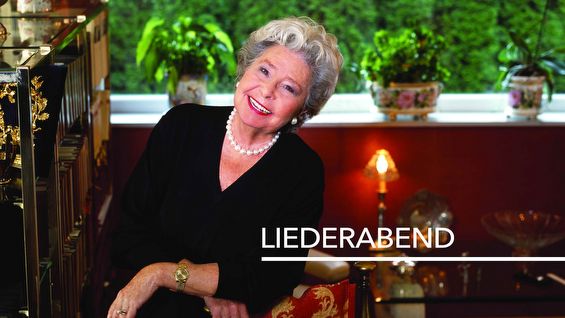
Christa Ludwig is acknowledged as one of the twentieth century’s most explorative and complete vocal artists. Her professional singing career spanned five decades and, as a star of the international operatic stage, she made roles as diverse as Rosina, Dorabella, Cherubino, Leonore, Amneris, Eboli, Kundry, Ortrud, Clytemnestra and the Marschallin her own, excelling in soprano, mezzo and coloratura mezzo repertoire. She also established her reputation as a fine lieder singer. In 1994, the last year of her stage career, Ludwig performed several Lieder recitals as part of a farewell tour. Christa Ludwig sings Lieder by Franz Schubert, Hugo Wolf, Gustav Mahler, Richard Strauss and Leonard Bernstein.

Composer:
Franz Schubert, Hugo Wolf, Gustav Mahler, Richard Strauss, Leonard Bernstein

Directed by:
Enrique Sánchez Lansch

Produced by:
O.M.M.A.

Soloists:
Christa Ludwig (mezzo), Charles Spencer (piano)

Die Hochzeit des Figaro WatchNow

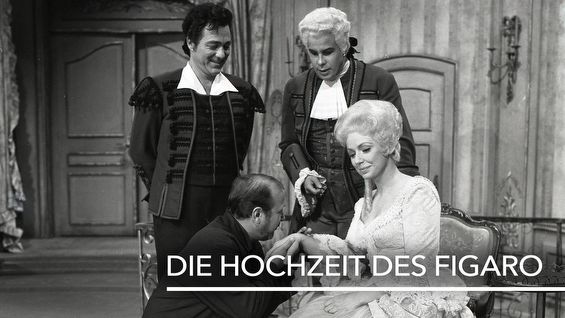
This German version of Wolfgang Amadeus Mozart’s Marriage of Figaro, with set and costumes by Ita Maximowna, dates from the year 1967. The Hamburg State Opera Choir and the Philharmonic State Orchestra of Hamburg are conducted by Hans Schmidt-Isserstedt, who worked as the opera company’s first conductor between 1935 and 1942 as well as from 1945 to 1971 and was chief conductor of the North German Radio Orchestra, which he had personally been responsible for reorganizing in the post-war years.
It may come as a surprise to learn that the singers, all of whom are now international stars, were drawn exclusively from the Hamburg State Opera ensemble - further proof of Rolf Liebermann’s skill in identifying up-and-coming musicians! The fact that almost all the singers were of roughly the right age for the roles they were playing helped enhance the film’s credibility and realism when it came to close-up shots.

Composer:
Wolfgang Amadeus Mozart

Directed by:
Rolf Liebermann

Conductor:
Hans Schmidt-Isserstedt

Soloists:
Edith Mathis, Arlene Saunders, Elisabeth Steiner

Participant:
Heinz Blankenburg, Tom Krause, Maria von Ilosvay, Noël Mangin

Orchestra/Chorus/Bellet:
Chor, Ballett und Philharmoniker der Staatsoper Hamburg

    CATALOGUE 2018
    CATALOGUE 15/16